
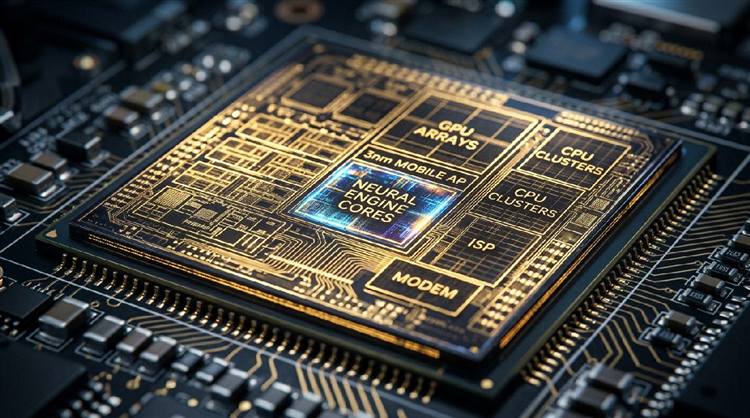

For the past decade, smartphone performance improvements were measured primarily in CPU clock frequencies and multi-core Geekbench gains. In 2026, the real battleground has shifted down to the nanometer level and into dedicated neural compute acceleration.
The Shift to 3nm and Gate-All-Around (GAA) Transistors
As silicon fabrication pushes against quantum tunneling barriers, foundry leaders have transitioned to advanced Gate-All-Around (GAA) nanosheet architectures.
Thermal Efficiency Under Heavy Load
Shrinking transistor dimensions allows mobile SoCs to pack over 20 billion transistors into a chip smaller than a postage stamp, cutting thermal throttling by over 30% while extending battery endurance during sustained computing workloads.
Unified Memory Bandwidth
Modern mobile architectures unify CPU, GPU, and NPU memory pools into high-bandwidth LPDDR5X configurations exceeding 68 GB/s. This unified fabric enables massive neural weights to be accessed without costly PCIe or inter-bus memory copies.
Local Offline AI: Why On-Device NPUs Matter
Running machine learning models locally on the smartphone rather than streaming requests to cloud data centers delivers three transformative advantages:
1. Absolute Privacy
Sensitive biometric recordings, voice transcripts, and private photos never leave the hardware device, neutralizing interception risks and third-party data collection.
2. Zero-Latency Execution
Eliminating round-trip network hops allows predictive text models, on-the-fly speech translation, and visual image segmentation to execute within milliseconds.
3. Full Offline Reliability
Whether in airplane mode or in remote areas with zero cell connectivity, critical productivity and generative features continue operating without interruption.
The Future of Mobile Computing
The convergence of sub-4-bit weight quantization, sparse neural execution, and dedicated tensor accelerators ensures that the next smartphone in your pocket will be a fully capable personal AI workstation.